




Strategic Portfolio Management for Enterprise Organizations

A practical guide to connecting strategy, funding, capacity, and delivery across complex portfolios.
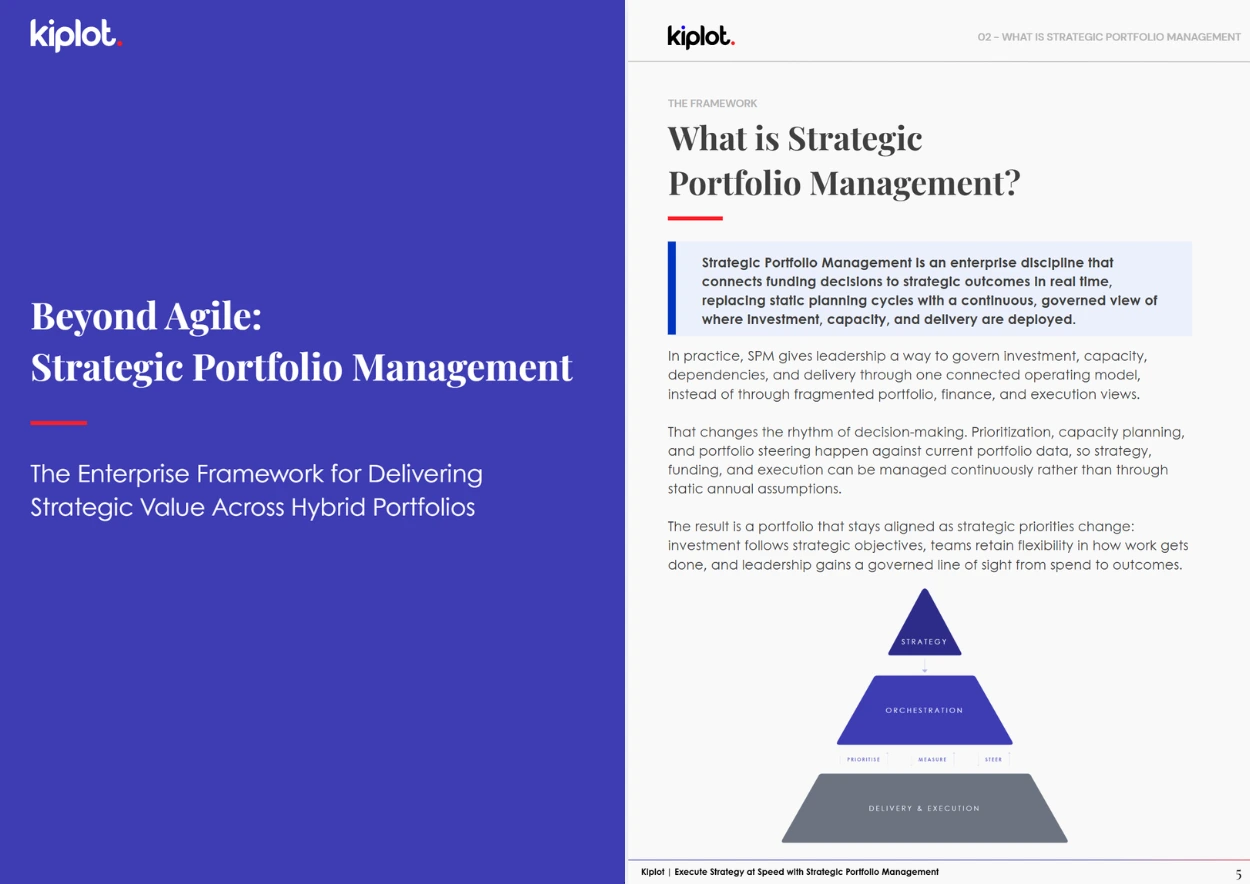
Strategic Portfolio Management Guide cover

What This Guide Covers

  • Connect strategy, funding, and delivery in one view Move from disconnected planning, finance, and delivery systems to a single portfolio narrative leadership can act on.
  • Re-prioritise investment as conditions change Build the financial agility to reshape the portfolio mid-year without breaking the governance model around it.
  • Govern outcomes, not just on-time delivery Hold the portfolio accountable for the strategic results investments were funded to produce, not just delivery milestones.
  • Bring hybrid delivery into one governance shape Apply consistent oversight across waterfall, agile, and hybrid work without forcing every team into one delivery model.
  • Make the case for SPM inside your organisation Build the narrative your CFO, CIO, and transformation leaders need to back the shift from project-focused PPM to enterprise SPM.

Use this guide to bring SPM thinking to the way your organisation governs investment, execution, and outcomes, so the portfolio reflects strategy rather than legacy operating habits.
The Case for Strategic Portfolio Management

In most enterprise organizations, strategy is set, investments are approved, and delivery teams are working. The challenge is that these activities are rarely managed through one current portfolio view.

Annual planning, funding decisions, business cases, capacity assumptions, delivery progress, and outcome tracking are usually spread across separate processes and systems. One team is working in Jira or Azure DevOps. Finance is working from ERP data. Portfolio teams are reconciling spreadsheets. Executive updates are still being assembled in PowerPoint.

That gap makes it difficult for leadership to see what is funded, what is deliverable, what has changed, and where intervention is needed.

Strategic Portfolio Management closes that gap by bringing strategy, funding, capacity, dependencies, and execution into one governed portfolio view.

What Is Strategic Portfolio Management?

Strategic Portfolio Management is an enterprise discipline for connecting funding decisions to strategic outcomes.

It gives leadership a current view of where investment, capacity, dependencies, and delivery are deployed across the portfolio. In practice, SPM helps organizations move from static annual planning to continuous portfolio steering.

This matters most in enterprise organizations, where work is delivered through a mix of agile teams, waterfall programs, product teams, and transformation initiatives.

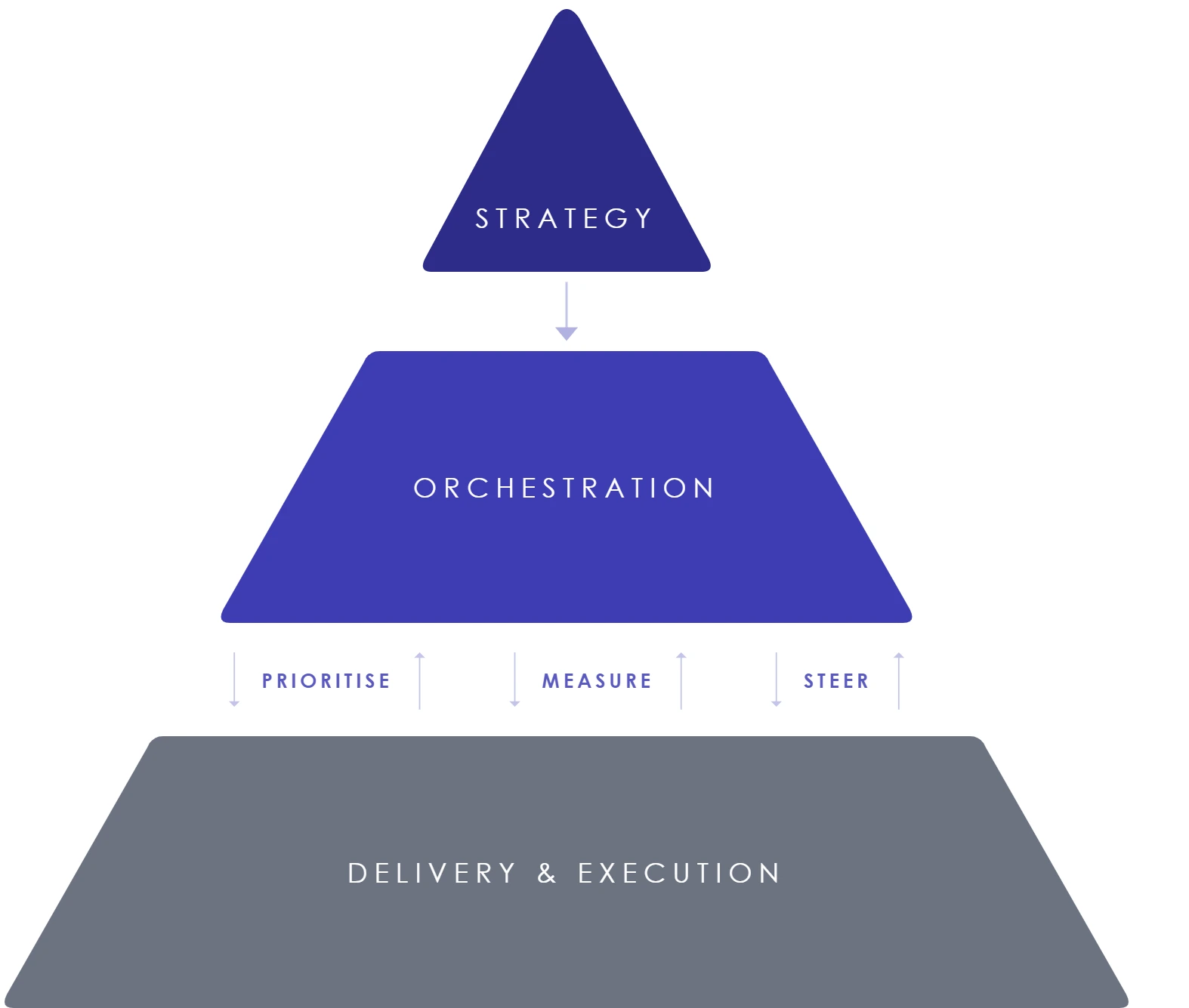
SPM does not force every team into one delivery model. It creates the orchestration layer above them.

Strategic Portfolio Management framework

Why Enterprise Organizations Are Moving Beyond Traditional PPM

Traditional PPM gave organizations control, governance, and financial discipline. Agile Portfolio Management introduced shorter planning cycles and greater adaptability.

Neither fully solves the modern portfolio challenge on its own.

Enterprise leaders need financial discipline, but they also need the ability to respond when priorities, capacity, dependencies, and delivery conditions change.

Strategic Portfolio Management brings those strengths together. It extends portfolio governance beyond project control, giving leadership a current view of what should continue, what should change, and where investment should move.

The Portfolio Questions SPM Helps Answer

Strategic Portfolio Management helps enterprise leaders answer the questions that fragmented reporting struggles to resolve.

Which initiatives are most critical to our strategic objectives?
Where is funding committed, and is it still justified?
Do we have the capacity to deliver what has been approved?
Which dependencies could put strategic outcomes at risk?
What has changed since the business case was approved?
What should we stop, delay, accelerate, or reallocate?

These are not reporting questions. They are portfolio decisions. They require a current view of strategy, funding, capacity, dependencies, and delivery in one place.

SPM vs PPM: What Changes?

Project Portfolio Management Strategic Portfolio Management
Focuses on project governance and delivery control Connects strategy, funding, capacity, and execution
Works well for predictable delivery environments Works across agile, waterfall, and hybrid portfolios
Tracks progress against approved plans Supports reprioritization as conditions change
Reviews benefits retrospectively Tracks outcomes continuously
Relies on periodic reporting cycles Gives leadership a current portfolio view

PPM remains important. SPM extends it by giving enterprise leaders a clearer way to connect investment decisions, delivery progress, and strategic outcomes.

Who This Guide Is For

This guide is written for enterprise leaders responsible for connecting strategy to execution across complex portfolios.

Strategy and transformation leaders

Who need clearer line of sight from strategic priorities to delivery outcomes.

PMO and portfolio leaders

Who need to govern work across agile, waterfall, and hybrid delivery models.

Finance and operations leaders

Who need better visibility of where capital and capacity are deployed.

Technology and delivery leaders

Who need flexibility at team level without losing enterprise-level control.

Download the Strategic Portfolio Management Guide

Learn how enterprise organizations are moving beyond disconnected planning, fragmented reporting, and rigid delivery models.

Get the Guide