[{"link":"https://www.kiplot.com/knowledge-center/h1-2026-portfolio-market-view/","imageSrc":"https://www.kiplot.com/wp-content/uploads/2026/07/H1-2026-Market-View-LinkedIn-300x300.webp","text":"Enterprise Portfolio Management Trends: 2026 So Far","excerpt":"AI dominated the conversation around enterprise portfolio management in the first half of 2026. But beneath the agentic fanfare, self-driving portfolios, synthetic…","category":"Insights","readTime":"8 min","buttonText":"Read article"},{"link":"https://www.kiplot.com/knowledge-center/ai-generated-risks-enterprise-portfolios/","imageSrc":"https://www.kiplot.com/wp-content/uploads/2026/06/field_of_risks-300x300.webp","text":"From Plausible Risk Logs to Portfolio Assurance. What we learned building AI risk review for SPM teams","excerpt":"SPM teams don't need another way to fill a risk log. They need a better way to decide which risks deserve attention. What we learned building AI risk review.","category":"AI","readTime":"9 min","buttonText":"Read article"},{"link":"https://www.kiplot.com/knowledge-center/agentic-project-management-how-ai-agents-are-changing-portfolio-delivery-without-removing-human-accountability/","imageSrc":"https://www.kiplot.com/wp-content/uploads/2026/05/image-21-300x300.webp","text":"Agentic Project Management: How AI agents are changing portfolio delivery without removing human accountability","excerpt":"Most AI in portfolio management is still reactive: it answers when asked. Agentic Project Management is what acting on its own looks like, and what that shift means for cost per benefit dollar.","category":"AI","readTime":"6 min","buttonText":"Read article"},{"link":"https://www.kiplot.com/knowledge-center/you-dont-have-five-problems-you-have-one/","imageSrc":"https://www.kiplot.com/wp-content/uploads/2026/04/Five-Challenges-Featured-Image-2-Fea-300x300.webp","text":"You Don't Have Five Problems. You Have One.","excerpt":"Most enterprises treat strategy, governance, delivery, finance, and resourcing as five separate problems. They are facets of one: the loss of portfolio coherence as hybrid delivery scales.","category":"Strategy","readTime":"6 min","buttonText":"Read article"},{"link":"https://www.kiplot.com/knowledge-center/why-microsoft-planner-isnt-the-successor-enterprise-pmos-expect/","imageSrc":"https://www.kiplot.com/wp-content/uploads/2026/02/ms_project_sunset-300x300.webp","text":"Why Planner Isn’t the Successor to Microsoft Project that Enterprise PMOs Expect","excerpt":"Project Online retires in September 2026. Microsoft's recommended path forward is Planner, a team-level work tool. Enterprise PMOs need to plan a different route.","category":"PMO","readTime":"4 min","buttonText":"Read article"},{"link":"https://www.kiplot.com/knowledge-center/ai-pmo-use-cases/","imageSrc":"https://www.kiplot.com/wp-content/uploads/2026/05/ai-in-pmo-300x200.webp","text":"AI for the PMO: 8 Use Cases Transforming Portfolio Management","excerpt":"As portfolios scale, the PMO's administrative load expands with them. Eight use cases where AI shifts capacity from maintaining visibility to interpreting it.","category":"AI","readTime":"7 min","buttonText":"Read article"},{"link":"https://www.kiplot.com/knowledge-center/waterfall-vs-agile-resource-capacity-planning-how-they-differ-and-how-they-work-together/","imageSrc":"https://www.kiplot.com/wp-content/uploads/2025/07/waterfall-vs.-agile-capacity-planning-300x300.webp","text":"Waterfall vs Agile Resource Capacity Planning: How They Differ, and how they work together","excerpt":"Waterfall takes people to the work. Agile takes work to the people. Most enterprise portfolios contain both, and the planning model has to reconcile them rather than choose.","category":"Capacity Planning","readTime":"6 min","buttonText":"Read article"},{"link":"https://www.kiplot.com/knowledge-center/face-value-five-steps-to-realizing-actual-benefits-in-your-organization/","imageSrc":"https://www.kiplot.com/wp-content/uploads/2025/05/Benefit-Relization-300x300.webp","text":"Face Value: Five Steps to Realizing Actual Benefits in Your Organization","excerpt":"Most organizations acknowledge benefits realization matters. Few systematically achieve it. Five practical steps to hold leaders accountable for the value they promised at investment time.","category":"Strategy","readTime":"6 min","buttonText":"Read article"},{"link":"https://www.kiplot.com/knowledge-center/pmo-as-air-traffic-control-orchestrating-strategy-execution-in-a-hybrid-enterprise/","imageSrc":"https://www.kiplot.com/wp-content/uploads/2025/03/PMO-to-ATC-Article-scaled-e1742408772474-300x279.webp","text":"PMO as Air Traffic Control: Orchestrating strategy execution in a hybrid enterprise","excerpt":"The PMO has shifted from passive reporting to active orchestration. How to design the function around alignment, dependency management, and execution across hybrid portfolios.","category":"PMO","readTime":"5 min","buttonText":"Read article"},{"link":"https://www.kiplot.com/knowledge-center/is-transformation-ever-accountable-for-delivery/","imageSrc":"https://www.kiplot.com/wp-content/uploads/2025/03/Is-transformation-accoutable-for-delivery-cover-300x300.webp","text":"Is Transformation ever accountable for delivery?","excerpt":"Transformation defines the strategy and aligns resources. That is not the same as owning delivery. Misplacing accountability is one of the most common reasons strategic initiatives stall.","category":"Transformation","readTime":"3 min","buttonText":"Read article"},{"link":"https://www.kiplot.com/knowledge-center/beyond-status-updates-transforming-enterprise-reporting-into-strategic-intelligence/","imageSrc":"https://www.kiplot.com/wp-content/uploads/2025/02/Writing-A-Great-Status-Report-Cover-scaled-e1741083011855-300x231.webp","text":"Beyond Status Updates: Transforming Enterprise Reporting into Strategic Intelligence","excerpt":"Status decks sanitized through hierarchy hide the very signals leaders need. How to design reporting that surfaces issues, triggers interventions, and connects strategy to execution.","category":"Reporting","readTime":"7 min","buttonText":"Read article"},{"link":"https://www.kiplot.com/knowledge-center/architecting-jira-for-large-organizations/","imageSrc":"https://www.kiplot.com/wp-content/uploads/2024/05/architecting-jira-enterprise-300x300.webp","text":"Architecting Jira for large organizations","excerpt":"Jira's flexibility is also its risk. At scale, it tips into chaos without deliberate structure. How to architect Jira for consistency and data quality without crushing agility.","category":"Technology","readTime":"7 min","buttonText":"Read article"},{"link":"https://www.kiplot.com/knowledge-center/demystifying-capex-why-do-finance-care-so-much-and-why-do-i-have-to-track-my-time/","imageSrc":"https://www.kiplot.com/wp-content/uploads/2024/05/time_tracking-300x300.webp","text":"Demystifying CapEx: Why do I have to track my time?","excerpt":"Why correct allocation of capital expenditure matters, in plain language for non-finance teams. Three reasons CapEx tracking is worth the effort, no accounting qualification required.","category":"Finance","readTime":"6 min","buttonText":"Read article"}]

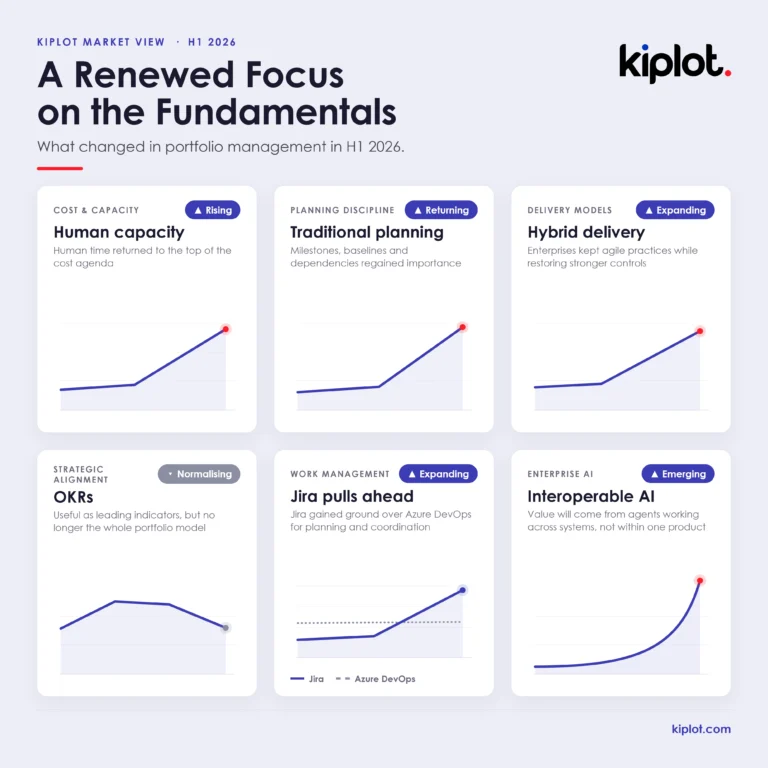 InsightsEnterprise Portfolio Management Trends: 2026 So FarAI dominated the conversation around enterprise portfolio management in the first half of 2026. But beneath the agentic fanfare, self-driving portfolios, synthetic PMOs, copilot-everything and the apparently imminent extinction of…
 AIFrom Plausible Risk Logs to Portfolio Assurance. What we learned building AI risk review for SPM teamsSPM teams don't need another way to fill a risk log. They need a better way to decide which risks deserve attention. What we learned building AI risk review.
 AIAgentic Project Management: How AI agents are changing portfolio delivery without removing human accountabilityMost AI in portfolio management is still reactive: it answers when asked. Agentic Project Management is what acting on its own looks like, and what that shift means for cost per benefit dollar.
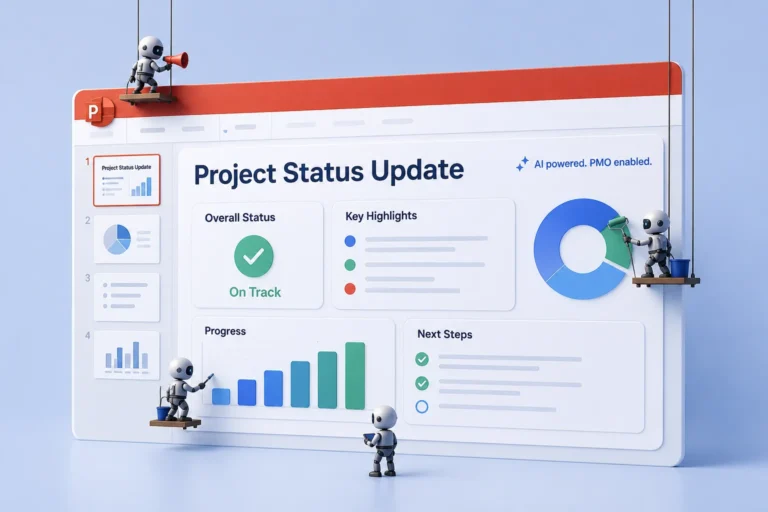 AIAI for the PMO: 8 Use Cases Transforming Portfolio ManagementAs portfolios scale, the PMO's administrative load expands with them. Eight use cases where AI shifts capacity from maintaining visibility to interpreting it.
 knowledgeArchitecting Jira for large organizationsJira's flexibility is also its risk. At scale, it tips into chaos without deliberate structure. How to architect Jira for consistency and data quality without crushing agility.